



Blog
Made in Portugal: Quality, Craftsmanship and the True Cost of Small-Batch Production
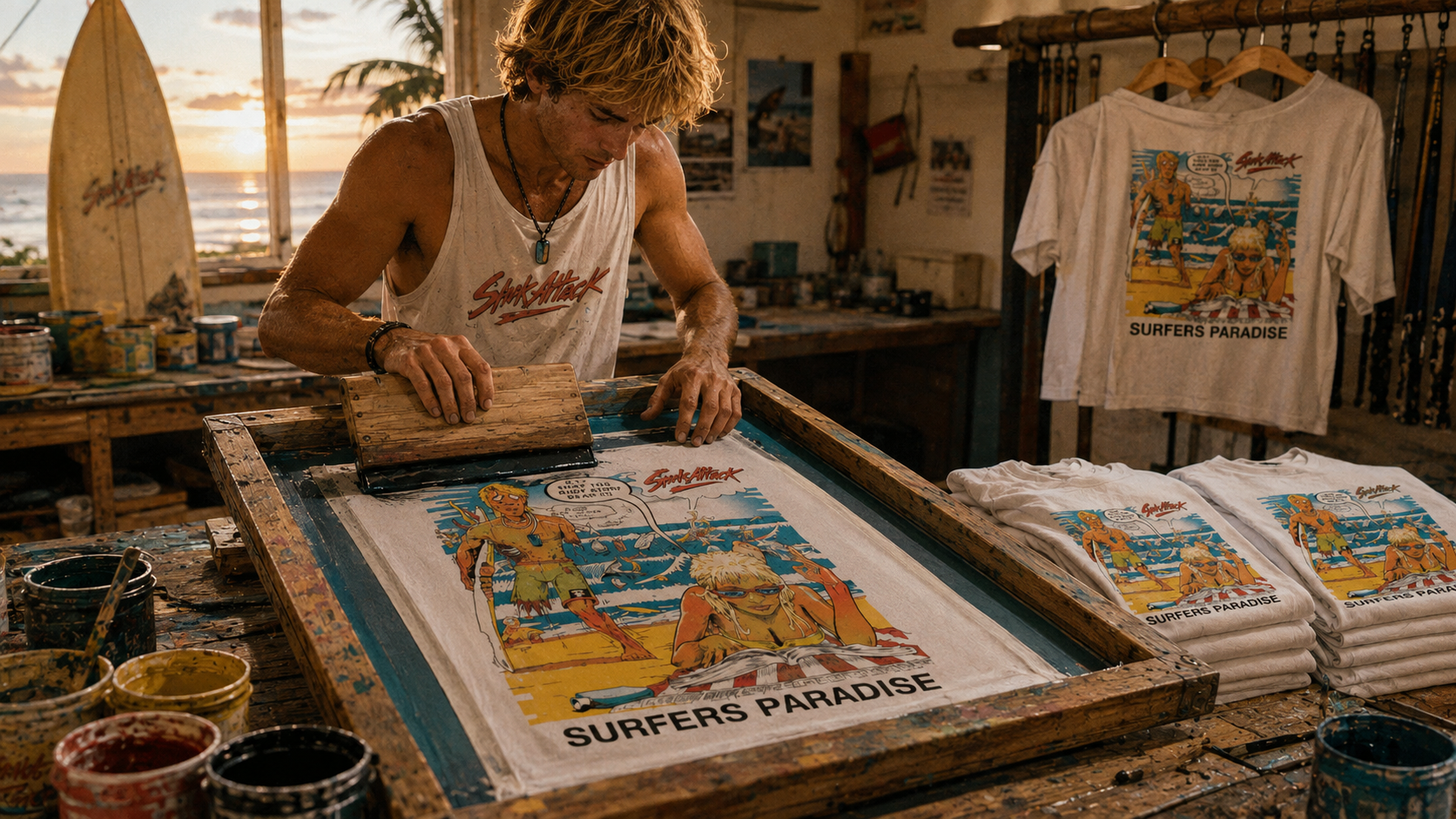
Made in Portugal: Quality, Proximity and the True Cost of Small-Batch Production
Choosing where and how to produce a garment is an essential part of our work. For us, manufacturing in Portugal means supporting local production, benefiting from extensive textile expertise and maintaining greater control over every stage of the process.
Portugal has one of Europe’s most established textile industries. Its expertise covers everything from material selection and garment construction to finishing and quality control. This long-standing tradition allows us to create comfortable, durable and exceptionally well-finished garments.
The Benefits of Producing Closer to Home
Working in Portugal allows us to maintain a direct relationship with the people and workshops involved in production. This proximity makes communication easier and helps us oversee important details such as fit, stitching, finishing and durability.
The result is a garment of excellent quality. However, achieving this standard requires time, expertise and several rounds of testing before reaching the final product.
The Importance of Choosing the Right Materials
Not every garment requires the same fabric. We select each composition according to the intended use, feel and performance of the individual product.
Cotton plays an important role in some of our garments because of its softness, breathability and comfort. It is particularly suitable for T-shirts and other pieces designed to be worn for long periods.
We do not make general claims that apply to every item in our collection. Instead, we provide the specific composition and characteristics of each garment so that our customers receive clear and accurate information.
The Artwork Is Also Part of the Quality
Our illustrations are not a secondary element added at the end of the process. They are a fundamental part of the identity of every T-shirt.
When a design contains many colours, reproducing it accurately requires a more complex printing process. It is not simply a matter of sending the artwork and applying it directly to the garment. The file must be prepared, the colours separated, tests carried out and the final result adjusted to ensure that the tones, details and positioning are correct.
Our aim is to preserve the character of the original illustration as faithfully as possible. Simplifying a design or removing colours could reduce production costs, but it would also cause the artwork to lose depth, detail and personality.
Why Printing with Many Colours Costs More
With techniques such as screen printing, each colour in an illustration generally requires its own screen, a separate ink and an individual printing stage. This means that a six-colour illustration requires considerably more preparation and more passes than a design containing only one or two colours.
Every colour must also be perfectly aligned. When an illustration contains fine details or similar tones, the screens must be registered with particular precision. Each T-shirt must pass through the different stages without the artwork losing definition.
The process also includes preparing the inks, carrying out colour tests, setting up the machinery, drying or curing the print and inspecting every finished garment.
The cost, therefore, does not increase simply because more ink is used. The greatest impact comes from the technical work required to prepare, print and carefully control each colour.
Although the exact process may vary depending on the printing technique, the principle remains the same: a complex illustration with many colours and fine details requires more time, preparation and quality control than a simple design.
The Challenge of Producing Small Quantities
When launching a project, ordering thousands of T-shirts is not usually a realistic option. It would require a very large initial investment and could leave us with a significant amount of stock before knowing the true level of demand.
However, many printing costs are fixed. Colour separation, screen or machinery preparation, testing and adjustments are necessary whether the production run is small or large.
With a large order, these costs are spread across hundreds or thousands of T-shirts. With a small production run, they are divided between far fewer garments, making the cost of each individual item considerably higher.
For example, preparing a multicoloured illustration requires almost the same initial work whether we print 30 T-shirts or 300. The difference is that, in the second case, the setup cost is spread across ten times as many garments.
Producing More Cheaply Does Not Always Mean Producing Better
Ordering large quantities would reduce the cost per garment, but it would also increase the financial risk. If a particular design did not receive the expected demand, a significant portion of the production could remain unsold in storage.
For this reason, we prefer to begin with carefully controlled production runs. Although each T-shirt costs more to produce, this approach allows us to understand our customers’ response, make informed adjustments to future editions and avoid producing far more garments than necessary.
It also enables us to preserve the complexity of the original illustrations. Rather than reducing each design to one or two colours simply to lower costs, we aim to reproduce its visual richness and remain faithful to the intention behind the original artwork.
What the Price of Each T-Shirt Represents
The price of one of our T-shirts reflects much more than the garment itself and the ink used to print it. It also represents:
- The quality of the selected materials.
- The expertise of the professionals involved in production.
- The creation and preparation of each illustration.
- The separation and precise adjustment of the colours.
- The tests carried out before production begins.
- The technical setup required for printing.
- The finishing and quality-control process.
- The decision to begin with carefully considered quantities.
We are not trying to compete with T-shirts manufactured by the thousands and printed with very simple designs. Our goal is to offer carefully made garments featuring illustrations full of personality, with a level of quality that can be appreciated in both the fabric and the finished print.
Transparency in Every Product
We believe that communicating clearly is just as important as taking care over the manufacturing process. That is why we provide the specific composition and characteristics of every item.
Manufacturing close to home, working with detailed multicoloured illustrations and producing carefully controlled quantities comes at a higher cost. In return, we can pay close attention to every detail, preserve the richness of each design and develop the project responsibly.
Behind every T-shirt are many decisions that are not always visible. Explaining them is our way of showing the product’s true value and the work required to transform an illustration into a well-made garment.